Martin buys Maria’s house and sets her up with a dairy
Martin EdenMartin Eden’s purchase of Maria’s house and establishment of her dairy turn his newly acquired publishing income into durable security for a woman whose hard work had kept her family housed but had not made the home their own. The change unfolds through a sudden real-estate transaction and a practical business arrangement: Maria first discovers that she owns the house where she has long paid rent, then learns that Martin intends her to leave laundry work and take up dairy ownership.
The money behind the decision
The action follows Martin’s first substantial publishing advance. Singletree, Darnley & Co. offers him a contract for his next book, raises his royalties to twenty per cent, and promises a five-thousand-dollar advance once he signs. The publishers also propose discussing an exclusive publishing arrangement for a term of years. Martin considers the potential scale of the royalties, calculating that fifteen cents multiplied by sixty thousand copies would amount to nine thousand dollars. He signs, names the book The Smoke of Joy, and sends it back with twenty storiettes written before he discovered his formula for newspaper stories. The check arrives promptly.
The timing makes the advance the immediate financial context for what follows. Martin does not simply use his new money for himself: he arranges for Maria to meet him in town on the afternoon the check arrives. His instruction is practical and specific, and the scale of his action is measured not by a promised sum but by what it secures for her: a house she will own and a livelihood that does not depend on her continuing to wash other people’s clothes.
From an appointment to a deed
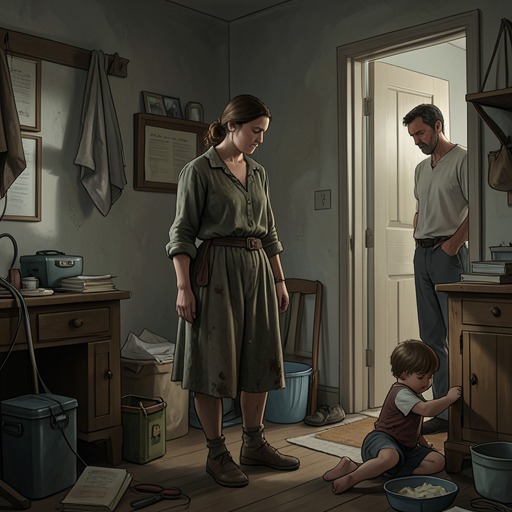
Maria arrives at the appointed place with only the possibility of new shoes in mind. That expectation makes the destination of their walk a sharp reversal: Martin passes a shoe store and takes her into a real-estate office. There, fine gentlemen speak with him, a typewriter clicks, and signatures are placed on an imposing document. Maria’s own landlord is present and signs as well. The scene makes the transfer formal, but Maria does not understand its full effect until they are back outside. Her landlord tells her she will not have to pay the rent that month, or in the months after it.
Maria is too stunned to answer coherently. She thanks the landlord as though he has done her a favor, an immediate response that shows how little she has yet absorbed the reversal in her circumstances. Only after she returns to North Oakland, talks with people she trusts, and has the Portuguese grocer investigate does she understand that she owns the little house for which she has paid rent for so long. The delay between signing and comprehension gives the purchase its emotional shape: the document changes her status at once, but the meaning of that change reaches her gradually.
A new livelihood
That evening, Martin tells Maria that he is leaving and that she will soon leave the house too, not as a tenant forced out but as its owner preparing to rent it to someone else. He directs her to send all her laundry back unwashed and to visit a brother in San Leandro or Haywards who is in the milk business. The brother is to come see Martin at the Hotel Metropole, where, Martin says, he will recognize a good milk ranch when he sees one. The plan links the house to a second source of income rather than treating ownership as the end of the arrangement.
The instructions are concrete: stop the laundry operation, contact the brother, and arrange a meeting so that Martin can help establish the dairy. The narrative confirms the result without specifying the purchase price, the ranch’s exact location, or the terms of the arrangement. Maria becomes the sole owner of a dairy, with two hired men doing the work. Her bank account steadily increases, and her family wears shoes and attends school. Property, paid labor, and the family’s improved material circumstances are presented as parts of the same outcome.
The meaning of the gift
Maria has not imagined a fairy prince; she has worked hard and is described as hard-headed. Yet the story gives her one in the unlikely figure of an ex-laundryman. The contrast matters: Martin’s generosity does not arrive as an abstract promise or a brief act of charity. It takes the form of ownership and an operating business, leaving Maria with assets and income after his departure. The house reverses the relation that had governed her life as a renter, while the dairy gives her a livelihood beyond laundry labor.
The action also marks a change in what Martin’s money can do. The contract turns his writing into immediate wealth, but this episode shows that its consequence reaches beyond literary success: he converts the advance into independent security for Maria and her family. The book stresses the practical completeness of the change—house, dairy, two employees, and a growing bank account—while keeping Maria’s own persistence in view. She is not merely rescued from poverty; she becomes the owner and beneficiary of an arrangement built around her future livelihood.